
How to Teach a Mixed-Level Dance Class (4 Structures)
A mixed-level room is a pacing problem, not a discipline problem. The four structures below all work by holding one phrase and varying its depth, rather than by averaging the level of the room.
Most advice on this starts from the wrong place. It treats the mixed-level class as something to manage: pair people up, give general corrections, offer an easier option. That advice is fine as far as it goes. It just skips the part most teachers already know: you have one clock and two speeds, and pairing people up does not change the clock.
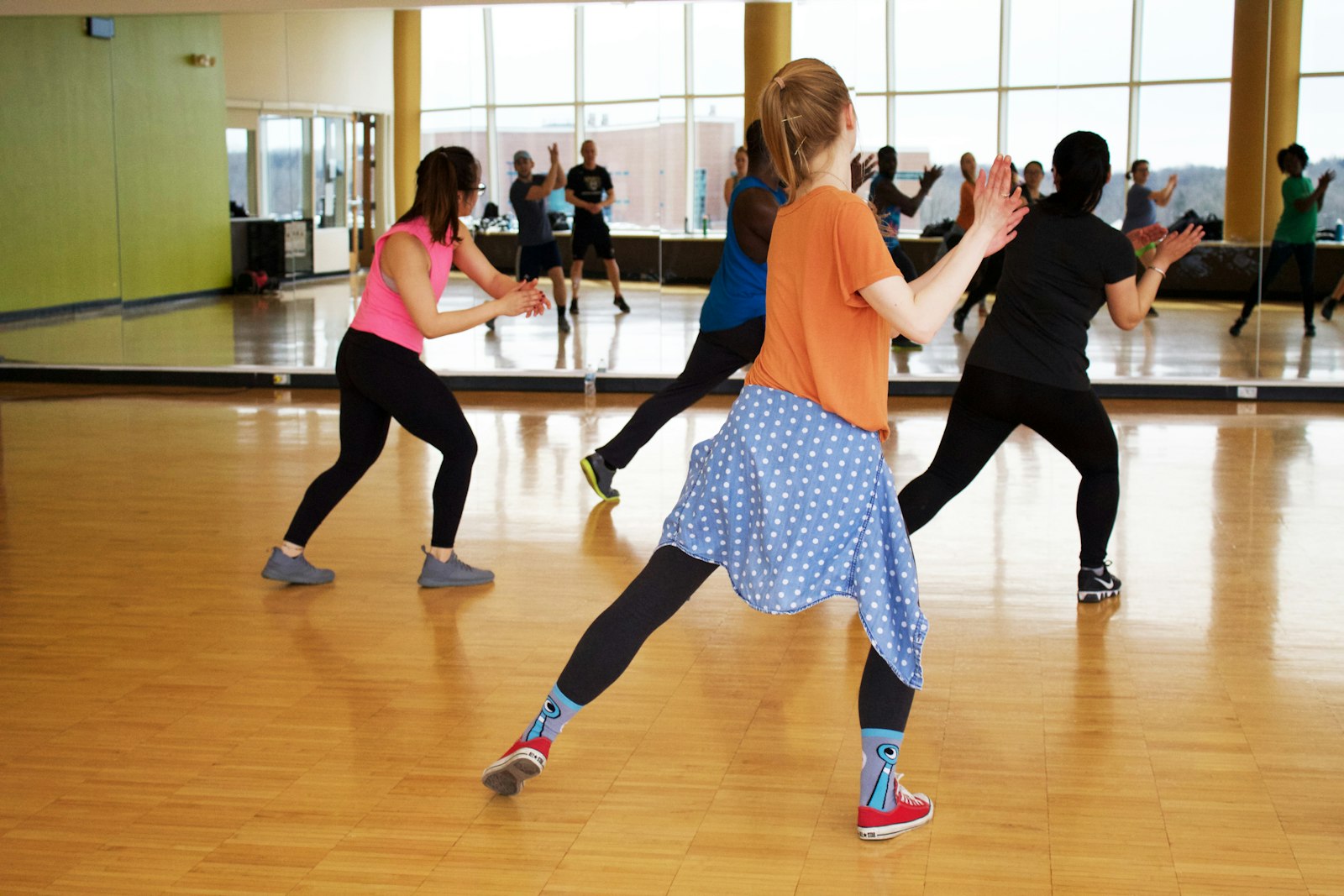
Why does teaching to the middle lose both ends?
The instinct is to split the difference. Pitch it slightly above the beginners, slightly below the advanced dancers, and hope the gap closes.
It usually doesn't, because the middle is not a real place. A dancer who has been in class for six weeks is not halfway between a first-timer and someone with ten years. They have a specific set of things they can and can't do, and so does everyone else. Aiming at an average produces a pace that is slightly wrong for nearly everyone in the room, which is worse than being clearly right for some of them.
The more useful reframe: stop varying the pace and start varying the depth. One phrase, taught once, at a speed the slowest dancer can follow, with more asked of the dancers who can give more. Nobody waits. Nobody is left behind. You teach it once.
The four structures
All four hold a single phrase and change what is asked of the dancer around it. Each one costs something, and the cost is the part worth knowing before you pick.
Same phrase, layered depth
Teach the footwork and the count to everyone. Then add a layer that only some of the room will take: arm styling, a level change, a head turn on the last count. The phrase stays identical, so the room stays together and you never teach two things.
Say the layers out loud as optional. "If you've got the feet, add the shoulder on four." That sentence does two jobs. It gives the advanced dancers something, and it tells the beginners that not having it yet is the expected state rather than falling behind.
The cost: your advanced dancers spend real time on footwork they already own. Layering only works if the layers are genuinely hard.
Split by section, not by level
When the routine has distinct sections, give different sections to different groups and bring them together at the end. The room divides by what people are working on rather than by how good they are, which changes the social meaning of the split entirely.
This is the structure that scales best to a wide room, and it's the one most likely to make the class feel like a piece rather than a drill.
The cost: it needs choreography built for it and a room big enough to hold two groups. It also needs you in two places, which is the part that goes wrong.
Peer anchoring, with a time limit
Put a confident dancer in each small group. The beginners get a second reference point from a body that isn't at the front of the room, which is often the thing that makes a move click.
Use this deliberately and briefly. Frame it as a task with an end: two run-throughs, then back. The failure mode is obvious once you've seen it — the same four strong dancers become permanent unpaid assistants, and they stop improving, and eventually they stop coming. They will rarely tell you this is why.
The cost: the advanced dancer's practice time. Spend it consciously.
Speed as the variable, not content
Run the same phrase at three speeds in sequence: slow to learn, medium to build, full to perform. Everyone does all three. The beginners get the routine at a speed they can actually follow; the experienced dancers get the full-speed run they came for.
This is the closest thing to a general answer, and it's what most experienced teachers converge on without naming it. It also has a real limit: it takes three times as long per phrase, so you cover less.
The cost: material. You will teach less choreography per hour. For most classes that's the right trade.
How long should you stay on one phrase?
Longer than it feels from the front. A reliable tell: the front row has it and the back row is watching the front row. Watching is not learning, and the difference is invisible from where you're standing because both look like people moving roughly correctly.
Move when the slowest dancer has it at half speed, not when the fastest has it at full.
When the spread is too wide to hold
Sometimes the honest answer is that one room can't do it. A first-timer and someone preparing for a performance do not have a shared hour, and pretending otherwise usually ends with both of them leaving.
Before splitting the class, check whether the spread is real or whether it's a confidence gap. Teachers regularly report that dancers who describe themselves as beginners are mid-level dancers who have never been told otherwise. A room that looks unteachably wide is sometimes a room where four people are underrating themselves.
The part you can't fix in the room
Every structure here is a way of managing one hour. None of them changes the underlying arithmetic: your beginners need more repetitions than the hour contains, and your advanced dancers need fewer.
Which is why the mixed-level problem is really a between-classes problem. A dancer who can rehearse the phrase at their own speed during the week arrives at the next class somewhere different. That's the gap we built WizDance to close. A clip of your choreography becomes a lesson your students can work through at whatever speed they need. The room you walk into next week is less spread out than the one you left.
The structures above still matter. They just get easier when the room is closer together to begin with.
Written from conversations with teachers running mixed rooms, and from the patterns that come up repeatedly in dance-teaching discussions. We haven't sat in on the classes described. If you teach this way and we've got something wrong, tell us and we'll correct it: wizdancefounder@gmail.com.
Teaching a room like this?
We're building WizDance with a small group of teachers, and the mixed-level room is the case we're designing around. Free early access, no strings.
Join the Founding Guru Circle →